

The capillary refill time in horses
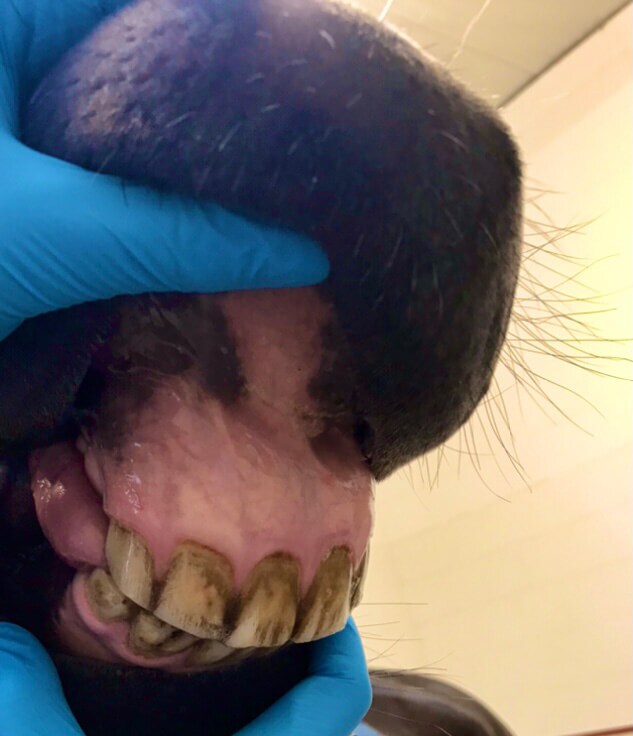
The horse's mucous membranes should be physiologically pale pink, smooth, moist and shiny, with finely marked vessels and without deposits.
Mucous membranes that can be seen and examined are
- Mucous membrane of the mouth (Fig. 1)
- nasal mucosa
- conjunctiva
- rectal mucosa
- Mucosa of the vagina or penis and prepuce
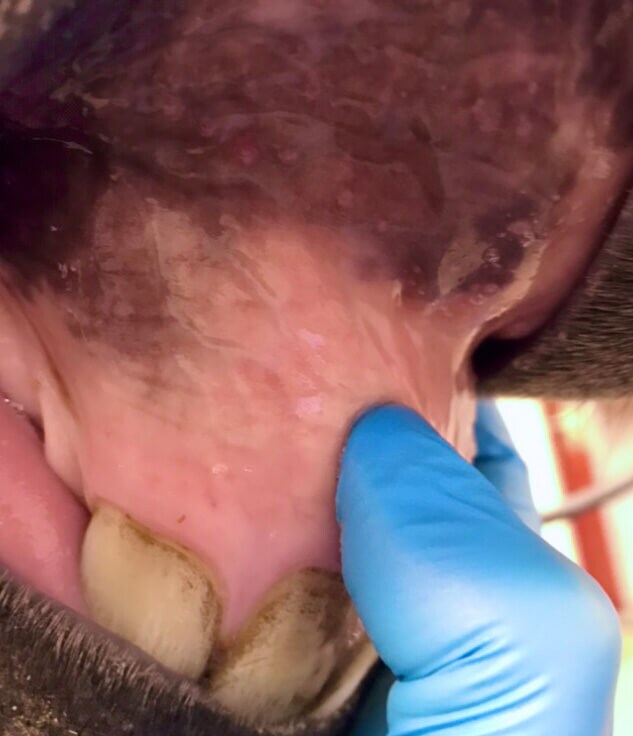
The capillary refill time, or "KFZ" for short, is of great clinical relevance. It describes the time required to reverse the temporary anaemia (triggering of a regionally limited anaemia) of the mucosa caused by the local finger pressure after detachment and to restore the original condition of the oral mucosa colour caused by the blood flow.
Realisation
The mucous membrane of the horse's mouth is suitable for determining the capillary refill time. Firstly, the horse's upper lip is lifted with one hand. Using the index finger or thumb of the other hand, the mucous membrane of the mouth is compressed with moderate pressure. The compression leads to the formation of an anaemic area due to a brief interruption of the capillary circulation. The mucous membrane pales in this area. After releasing the finger pressure, the time after which the mucous membrane returns to its original colour (refilling) should be no more than 2 seconds.
Tip:
It is recommended to use unpigmented mucosa for the examination.
Short and sweet
The capillary refill time is an important part of the general examination of the horse. As a diagnostic method in conjunction with other clinical parameters, it can provide a valuable indication of the horse's state of health. The capillary refill time should not exceed 2 seconds.
All images © Nele Hamer