
The wolf's tooth in our sights
Anatomical position of the wolf tooth
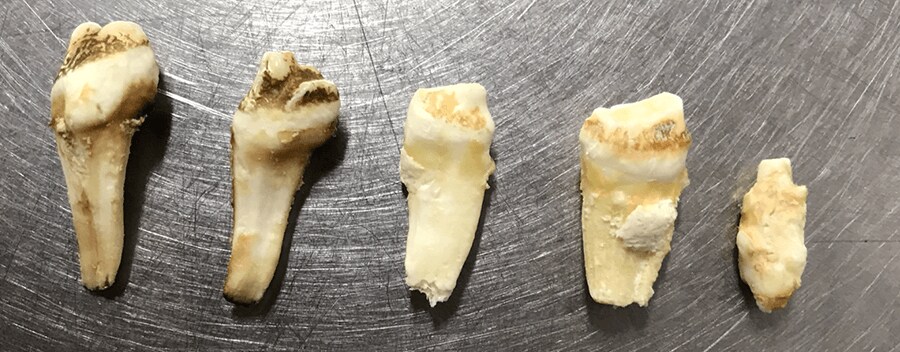
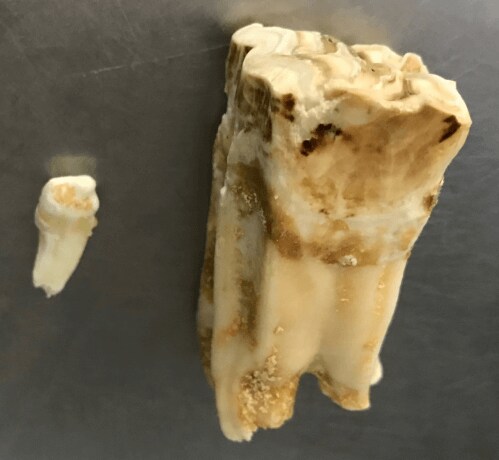
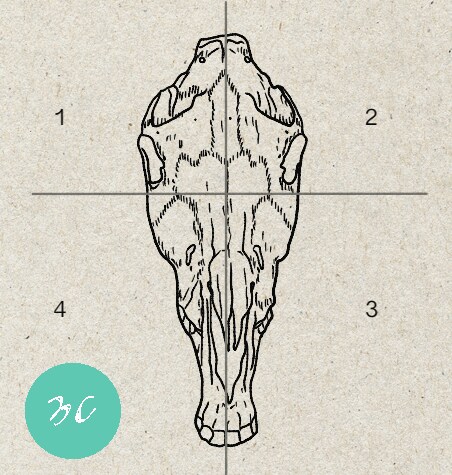
The wolf tooth (dens lupus, Fig. 1, Fig. 2) is categorised as a premolar (Fig. 3a). It is therefore the "5th" (Triadan 05 the 1st molar (P1)) in the tooth row (Fig. 3b). The eruption of the wolf tooth as the first premolar takes place around the age of 5-18 months. Depending on the tooth germination system, a horse can develop none, several or all 4 rows of teeth in the individual quadrants (Fig. 3 c). These can be located mesial (cranial or rostral), medial or lateral to the 2nd premolar. Wolf teeth occur in approx. 50 % of horses and are more common in the upper jaw and in male horses. The form is usually brachydont, i.e. a tooth with a short clinical and anatomical crown and root, whereby a single short root is usually anchored in the periodontium.
If the supernumerary 1st premolar remains covered by the gingiva, it is referred to as a "blind" wolf tooth.
Good to know
The occurrence of a wolf tooth is also technically referred to as "atavistic polyodontia", i.e. it is a regressed, supernumerary tooth. Due to evolutionary changes in the space available in the horse's oral cavity, the wolf's tooth is often only rudimentary and developed - in some cases it is missing completely. Compared to the other molars, it also has a different shape and function.
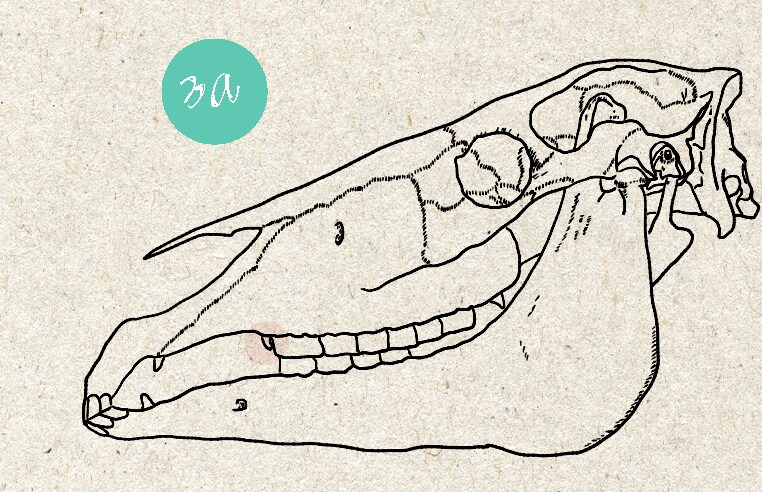
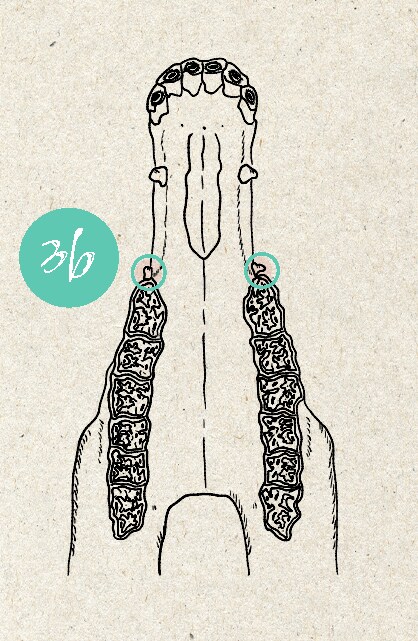
a: Anatomical position of the wolf tooth.
b: Classification according to Triadan.
c: Illustration of the individual quadrants.
What is the functional significance of the wolf tooth?
In principle, the wolf tooth has lost its grinding function in the masticatory ridge of the horse's molars. This is due to its developmentally altered anatomy and partial rudimentation. The wolf teeth are often located mesially of the 2nd premolar without any reaction and without any disturbing effects on the health of the oral cavity. However, due to the different anatomical formation and positional relationship as well as the large variations in structural shape and size, functional disorders and pain reactions can occur under certain circumstances.
This results in rideability problems with the following symptoms:
- Headshaking
- Defence reactions when riding and using the snaffle bit
When is an extraction recommended?
Extraction of wolf teeth should not be performed without an indication and as a matter of principle.
Indications for extraction are
- abnormal position
- loose fit
- inflammation
- presence of a blind wolf tooth (Fig. 4)
Good to know
It is advisable to carry out a mouth examination on young horses before they are broken in and the snaffle bit is fitted for the first time. It makes sense to check for the presence of wolf teeth, among other things, so that any necessary corrections can be made at an early stage. In this way, any pain that may arise for the horse can be prevented.
The wolf tooth extraction is performed on a sedated patient
A special examination of the oral cavity is required before an extraction.
You can make the following preparations for the procedure:
- Check tetanus immunisation
- Apply sedation and local anaesthesia in consultation with the vet
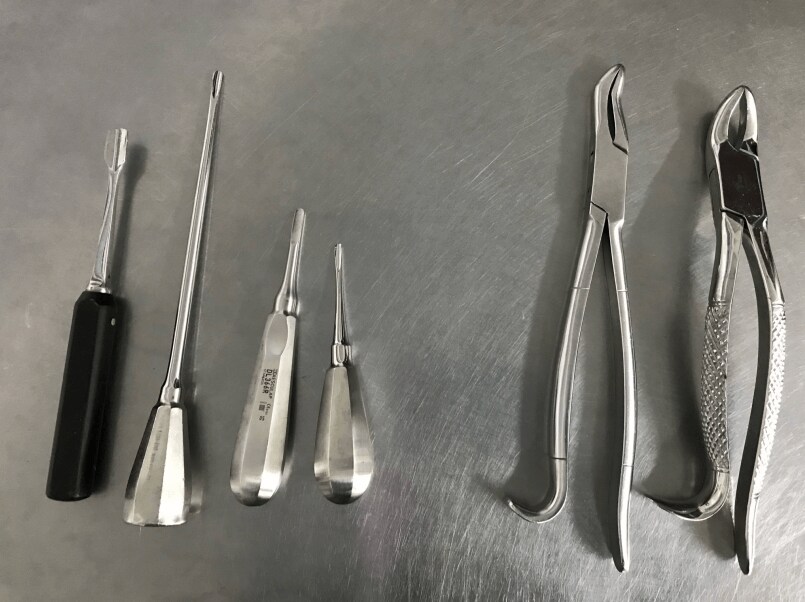
- Prepare instruments (Fig. 5) for loosening (Bein's root lifters) and extracting the tooth (dental forceps)
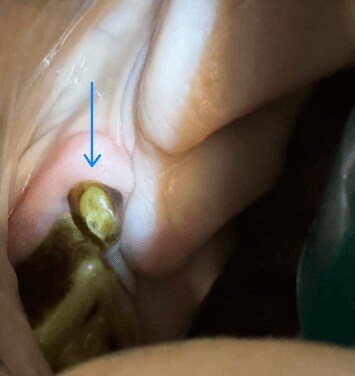
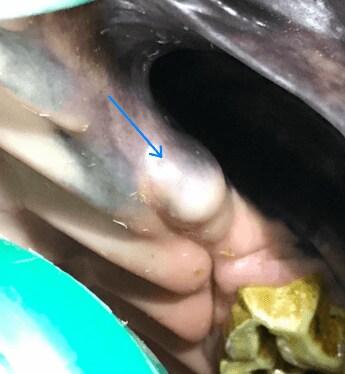
Short and sweet
The wolf tooth corresponds to the 1st premolar of the dental arch in the horse's dentition. Due to an evolutionary adaptation of the horse, it has a different shape, size and function compared to the other molars. The necessity of an extraction must always be decided on the basis of the individual circumstances and depending on the specific needs of the horse.
All images © Nele Hamer